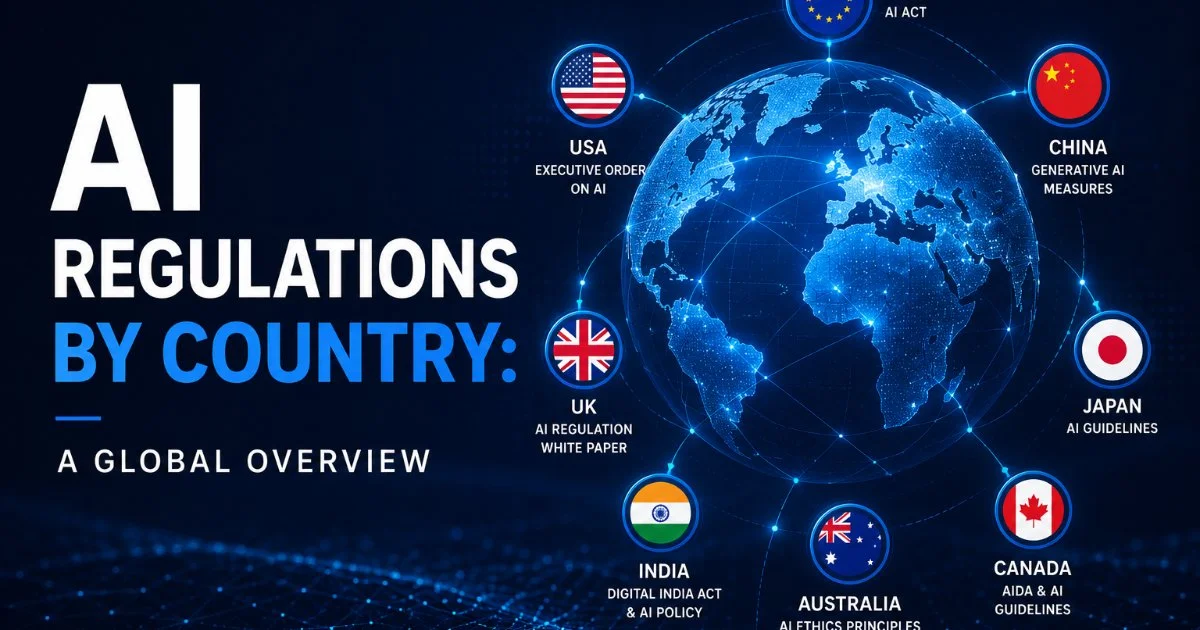
AI compliance and AI regulations vary dramatically from one country to the next, creating a patchwork of rules that every AI project manager and compliance officer must navigate. The EU AI Act represents the most comprehensive framework to date, but it is far from the only regulation shaping how organizations build and deploy artificial intelligence.
From the United States to China, from Brazil to Canada, governments are staking out their positions on AI governance and risk management. Understanding these differences is not optional; it is a business requirement. Misreading a single regulatory boundary can result in fines, product bans, or reputational damage that takes years to repair.
This guide walks you through the practical steps needed to map, compare, and comply with AI regulations across the globe.
For a foundational understanding of what compliance means in this space, see our detailed explanation of what AI compliance is, with definitions, examples, and how it works.
Key Takeaways
- The EU AI Act sets the global benchmark with its risk-based classification system.
- The United States relies on sector-specific guidance rather than one unified federal law.
- China enforces strict rules on generative AI, algorithmic recommendations, and deep synthesis.
- Brazil and Canada are advancing comprehensive AI bills through their legislatures now.
- Organizations operating across borders need a compliance matrix mapping each jurisdiction's requirements.
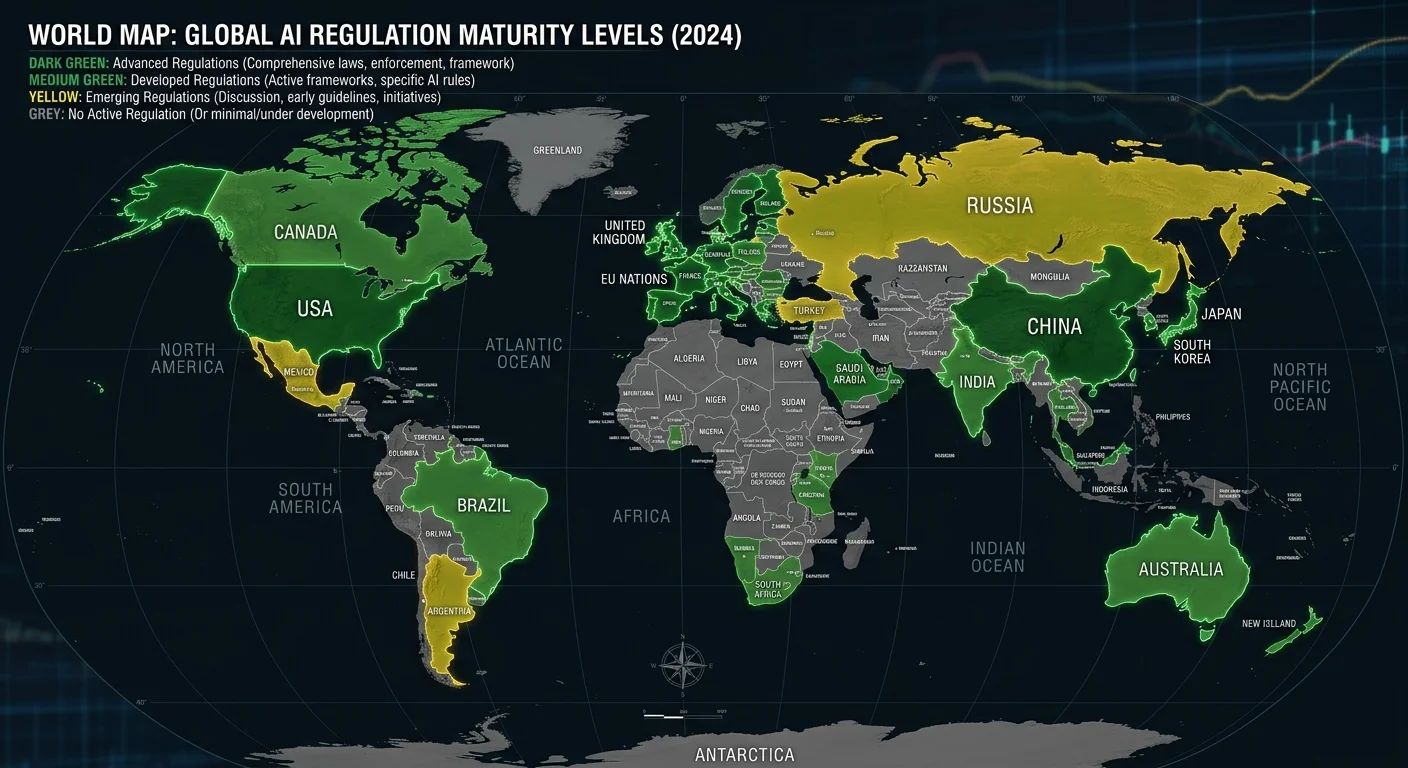
Step 1: Map the Major Regulatory Frameworks
The EU AI Act
The EU AI Act, formally adopted in 2024, classifies AI systems into four risk categories: unacceptable, high, limited, and minimal. Unacceptable-risk systems, such as social scoring by governments, are banned outright. High-risk systems, including those used in hiring, credit scoring, and law enforcement, face mandatory conformity assessments, human oversight requirements, and extensive documentation obligations. This risk-based approach has become a reference model for regulators worldwide.
Organizations placing high-risk AI systems on the EU market must register them in a public database and maintain technical documentation proving compliance. The penalties are steep: up to 35 million euros or 7% of global annual turnover for violations involving prohibited AI practices. For other infractions, fines can reach 15 million euros or 3% of turnover. These numbers make the GDPR's penalty structure look modest by comparison.
United States Approach
The United States has not enacted a single federal AI law. Instead, it relies on a combination of executive orders, agency-level guidance, and state laws. President Biden's October 2023 Executive Order on AI directed federal agencies to develop safety standards, and NIST published the AI Risk Management Framework (AI RMF) as a voluntary guideline. States like Colorado and Illinois have passed targeted laws addressing AI in employment decisions and biometric data processing.
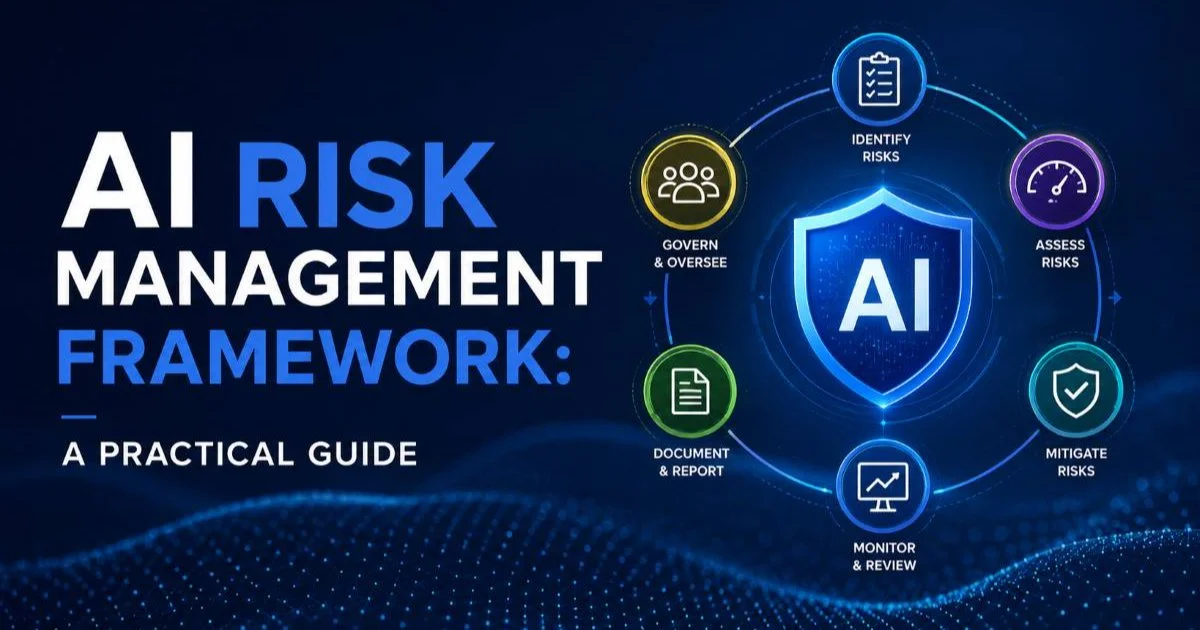
This fragmented approach creates real challenges for compliance officers. A company deploying an AI hiring tool must comply with New York City's Local Law 144 (requiring bias audits), Illinois's AI Video Interview Act, and potentially Colorado's AI Act, all while following federal guidance from the EEOC. For practical guidance on navigating risk-based frameworks like NIST's, our AI Risk Management Framework: A Practical Guide covers the core concepts in depth.
Create a state-by-state regulatory tracker for U.S. operations; at least 17 states have proposed or enacted AI-specific legislation as of early 2025.
China's AI Regulations
China has moved faster than most countries in enforcing AI-specific regulations. The Interim Measures for the Management of Generative AI Services, effective August 2023, require providers to conduct security assessments, label AI-generated content, and train models using "legitimate" data sources. Separately, the Algorithm Recommendation Regulations (2022) mandate algorithmic transparency and give users the right to opt out of personalized recommendations. China's approach prioritizes state security and social stability alongside innovation.
For foreign companies operating in China, these rules carry significant operational implications. Any generative AI product offered to users within mainland China must undergo a filing process with the Cyberspace Administration of China. The deep synthesis regulations add further requirements around watermarking and content provenance. Ignoring these obligations can lead to service shutdowns, not just fines.
Companies providing AI services to Chinese users must complete regulatory filings before launch; retroactive compliance is not accepted.
Step 2: Compare Requirements Across Jurisdictions
Comparing regulatory requirements side by side is the most effective way to identify gaps in your compliance posture. The table below summarizes how major jurisdictions handle core regulatory elements. Notice that while the EU AI Act and China's regulations are binding and enforceable, the U.S. framework remains largely voluntary at the federal level. Canada's Artificial Intelligence and Data Act (AIDA), part of Bill C-27, would create binding obligations if passed, including requirements for impact assessments of high-impact AI systems.
| Jurisdiction | Primary Framework | Binding? | Risk Classification | Key Obligation | Penalties |
|---|---|---|---|---|---|
| European Union | EU AI Act | Yes | 4-tier risk system | Conformity assessment for high-risk AI | Up to 35M EUR / 7% turnover |
| United States | NIST AI RMF + state laws | Mostly voluntary | Context-dependent | Bias audits (NYC), transparency | Varies by state |
| China | Generative AI Measures + Algorithm Regs | Yes | Activity-based | Security assessments, content labeling | Service suspension, fines |
| Canada | AIDA (Bill C-27, pending) | If enacted | High-impact designation | Impact assessments, mitigation plans | Up to 25M CAD / 5% revenue |
| Brazil | AI Bill (PL 2338/2023) | If enacted | Risk-based | Algorithmic impact assessment | Up to 2% revenue (proposed) |
| UK | Pro-innovation framework | No (principles-based) | Sector-specific | Existing regulators apply AI principles | Sector-dependent |
Brazil's AI bill, PL 2338/2023, draws heavily from the EU AI Act's structure but adapts it to local priorities, including stronger protections for workers affected by automated decision-making. The UK has taken a deliberately lighter approach, asking existing regulators like the FCA and Ofcom to apply five cross-cutting principles (safety, transparency, fairness, accountability, and contestability) to AI within their sectors. This means compliance requirements differ depending on your industry.
"The regulatory landscape is not converging toward a single global standard; it is fragmenting into regional approaches that demand localized compliance strategies."
Project managers should build a compliance matrix mapping each jurisdiction where their AI system operates against the specific requirements of that country's framework. This matrix becomes your operational blueprint, highlighting where you need bias audits, where you need content labeling, and where you need conformity assessments. Without it, cross-border compliance is guesswork.
Step 3: Build a Cross-Border Compliance Program
Documentation and Vendor Management
A cross-border AI compliance program starts with documentation. Every jurisdiction, from the EU to China, requires some form of technical documentation or impact assessment for higher-risk AI systems. Standardize your documentation templates so they capture the superset of requirements across all markets. This means recording training data provenance, model performance metrics, bias testing results, and human oversight mechanisms in a single, comprehensive record that can be adapted to any regulator's format.
Vendor management is equally important. If your AI system incorporates third-party models, APIs, or data sources, you inherit their compliance risks. Building your AI compliance program from scratch should include contractual clauses requiring vendors to provide documentation about their model training data and evaluation processes. Tools like vendor and contractor management platforms can help you track these obligations systematically rather than relying on spreadsheets and email threads.
Require third-party AI vendors to provide model cards and data provenance documentation as part of your procurement contracts.
Governance Structures
Effective AI governance requires clear organizational accountability. Designate an AI compliance lead or committee responsible for monitoring regulations across every jurisdiction where you operate. This is not a part-time job. For organizations deploying AI across multiple countries, our guide on AI governance best practices for enterprises provides a detailed framework for establishing oversight structures, including board-level reporting and cross-functional review committees.
Your governance structure should also account for how regulatory information flows to technical teams. Engineers and data scientists need to understand which risk categories their systems fall into and what testing requirements apply. Making your compliance documentation and regulatory summaries accessible, including through AI-agent-friendly knowledge bases, helps distribute this knowledge across the organization rather than bottlenecking it with a single compliance officer.
The EU AI Act requires that organizations appoint individuals with sufficient authority and competence to oversee high-risk AI systems.
Step 4: Monitor and Adapt to Regulatory Changes
Tracking Emerging Regulations
AI regulation is moving at an extraordinary pace. Between 2023 and 2025, the number of countries with active AI legislation or formal regulatory proposals has more than doubled. India, Japan, South Korea, and Singapore are all developing frameworks, with Singapore's Model AI Governance Framework already in its second edition. Japan has taken a softer approach, favoring industry self-regulation guided by government principles, while South Korea is drafting binding legislation focused on high-risk applications in finance and healthcare.
Set up a systematic monitoring process. Subscribe to regulatory bulletins from bodies like the OECD AI Policy Observatory, the EU AI Office, and national standards organizations. Assign team members to track specific jurisdictions. Quarterly compliance reviews should assess whether any new laws or amendments affect your AI systems, with clear escalation paths when they do. This is an ongoing operational discipline, not a one-time project.
Future-Proofing Your Strategy
The smartest compliance strategy is to build for the strictest standard and adapt downward. If your AI system meets the EU AI Act's high-risk requirements, you are likely to satisfy most other jurisdictions' expectations with minor adjustments. This "comply to the highest standard" approach reduces the cost and complexity of maintaining parallel compliance programs. It also positions your organization well as other countries adopt similar frameworks.
Invest in automation for compliance workflows. Automated model monitoring, bias detection pipelines, and documentation generation tools reduce the manual burden of maintaining compliance across jurisdictions. As regulations multiply, manual processes simply will not scale. The organizations that build this infrastructure now will have a significant advantage over those that scramble to retrofit compliance when new laws take effect. Build the system once, adapt it many times.
Conduct a gap analysis between your current compliance posture and the EU AI Act's high-risk requirements; this reveals gaps that other jurisdictions will likely address too.
Frequently Asked Questions
?How do I build a compliance matrix for multiple AI jurisdictions?
?How does the EU AI Act's penalty structure compare to GDPR fines?
?Does registering a high-risk AI system in the EU public database take long?
?Is it a mistake to treat the NIST AI RMF as a legal compliance requirement?
Final Thoughts
Navigating AI regulations across multiple countries demands structured, proactive work. No single framework covers every market, and the regulatory landscape will only grow more complex over the next two to three years.
Build your compliance program around the strictest standards, invest in documentation and governance infrastructure, and assign dedicated resources to regulatory monitoring. The organizations that treat AI compliance as a strategic capability, rather than a reactive burden, will move faster and compete more effectively in every market they enter.
Disclaimer: Portions of this content may have been generated using AI tools to enhance clarity and brevity. While reviewed by a human, independent verification is encouraged.